
FT8 Operating Guide
- Details
- Written by: G Wolfe - KI0KK
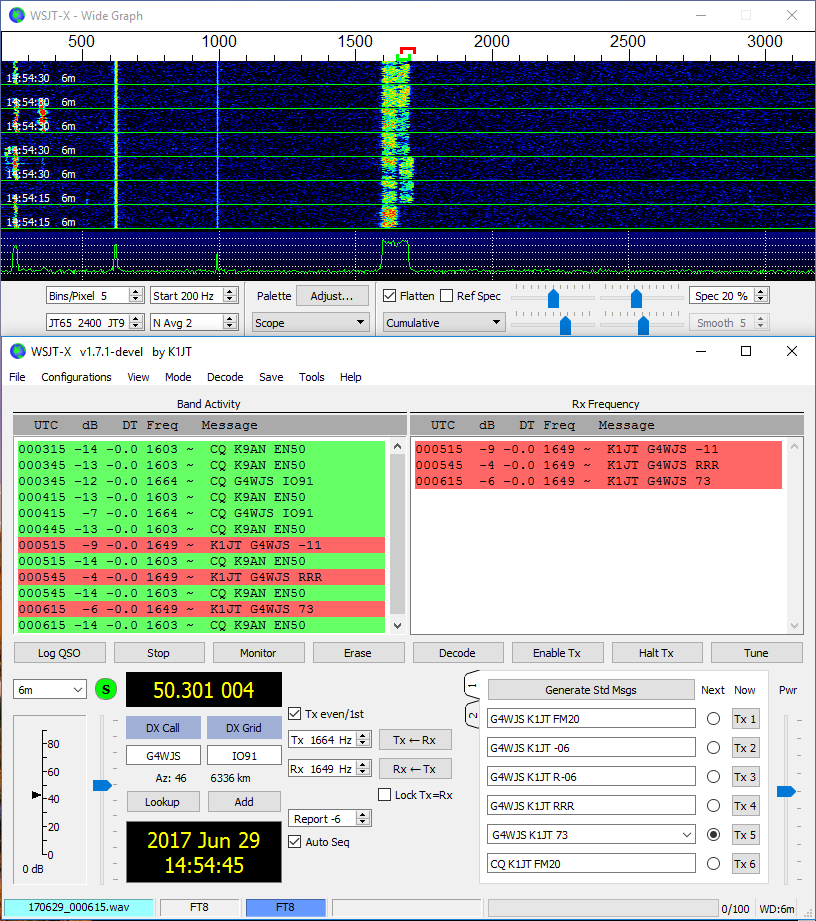
An FT8 operating Guide is maintained by Gary Hinson ZL2iFB. The current Version is 1.19, April 2018
Anderson Power Pole Connectors
- Details
- Written by: G Wolfe - KI0KK
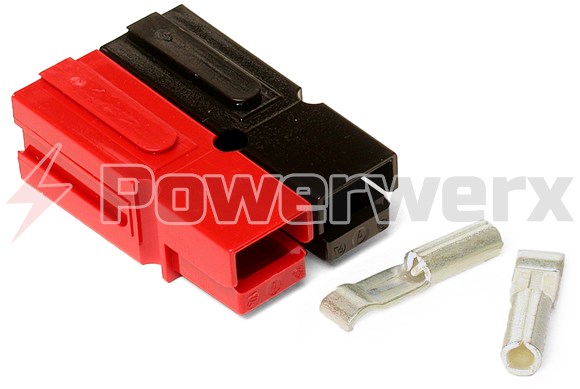
Anderson Power Pole Connectors are the established standard for DC power connections for Amatuer Radio devices. Here are a few helpful articles on assembly and the ARES/RACES standard for their use.
Youtube video on assembly:
ARRL Article:
ARES/RACES Standard:
Home Brew
- Details
- Written by: Jim Cessna - AC0KN
Home Brew is the construction of a piece of Ham gear by a Ham in a shack, basement, or garage. Most Hams start out building kits. A large percentage of home brewers begin building a Morse code oscillator in order to learn Morse code. Soon they graduate to more sophisticated endeavor like tube receivers, transistorized equipment, and even surface mounted devices (SMDs).
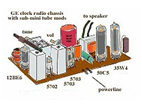
My home brew career started with a 5-tube AM radio. I found a brown bag of parts and a schematic drawing of how the parts were to be wired together in my garage. My dad squirreled away little projects like this to be returned to at a later date. The garage attic became my unofficial “shack”. After several hours and globs of solder, I finally finished the 5-tube AM radio. It was pretty ugly, but it worked. The IF-stages needed some tweaking, but it worked. Oh, did I mention IT WORKED! From that point on, I was hooked!
About this same time frame, my dad brought home a Hellicrafter SX-71 receiver. More about that later.
In high school, I took electrical shop, in which the class sent off for kits for each student to build a 5-tube AM radio. I got an “A” for having the first radio that worked in class and having the neatest wiring (square corners).
I joined the Air Force, going through technical school learning electronics.
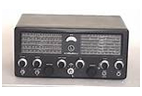
Fast forward several years. In 1994, my interests returned to electronics and simultaneously to Amateur Radio. Remember earlier when my dad brought home the Hellicrafter SX-71 receiver, a boat anchor by today’s standards. Well that planted the seed of Amateur Radio interest, so it was only natural that my interest funneled back into Amateur Radio and Home Brewing.
I attended the Technician Class Ham Class from the Santa Fe Trail ARC. I passed the test ending up with my Technician Plus license. Now, it was time for my first Amateur radio. So I decided to build one.
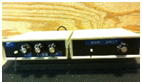
My first Amateur Radio kit was a Ramsey 80m transmitter bought from Associated Radio. I worked several nights soldering all the parts on the PCB board. I borrowed an 80m crystal from Jim Andera K0NK. I home brewed an 80m dipole antenna and placed it in the attic. It came close to becoming a folded dipole. I was all set to transmit. Then, it struck me – I didn’t have a receiver in order to hear myself, or anyone else for that matter.
I got a brilliant idea. I would call a club member, Tom Rose K0ZM-SK, and have him listen for me when I transmitted. I heard myself transmit over his receiver and into the telephone. My 80m transmitter WORKED! I got busy building the matching the Ramsey 80m receiver. They both worked. I was on a roll. I felt like the little boy in Oliver Twist, “Please sir, may I have some more?” More home brew that is.
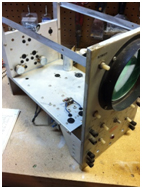
Be careful for what you wish for; you might just get it. At breakfast one Saturday, I was lamenting the fact that I didn’t have a piece of test equipment called an Oscilloscope. The following Saturday, Harry Krout W0YQG-SK gave me his “started but unfinished” oscilloscope EICO “kit” (circa 1965). I eagerly and gratefully accepted the parts and the challenge of putting it together. It’s down a few notches on my “To Do List”, but still on my radar.
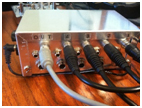
I have several home brew projects on my radar. The latest finished home brew project was Bob Heil’s sound mixer. I made a few changes, but the bones (schematic) came from him.The mixer takes the Ext. Spk output from your rigs and feeds them through pots into a 1 watt audio amp, which drives a speaker or earphones. The back wires show 4 radios “in” with the gray wire “out” feeding the earphone. Each input/output can be ¼ phone jack, 1/8 phone jack, or a RCA jack.
I encourage everyone to try and build something. Begin small and simple. Build, build, build, and have fun!
Amateur Data Interchange Format (ADIF) File
- Details
- Written by: Jim Cessna - AC0KN

The purpose of the ADIF file format is to provide a standard format for amateur data. The standard format of the data can then be shared between various amateur programs and contests.
ADIF file syntax consists of four components; field-name, field-length, field-type, and its field-value. For example, field-name of “DATE”, has a field-length of “8” characters, has a field-type of date (yyyymmdd), and has a field-value of “20160625”. E.g., 20160123
The field-name may include the characters A-Z, 0-9, and _, but must begin with a letter. The field-type is optional. E.g., 20160123
The following is an actual ADIF file record from our KS DAY special event. We used our club’s copy of N3FJP software and just happens to be from the CW station on 40m. It contains header information (occurs 1 time), and a record which contain a group of fields for each QSO contacted. A record consists of all the fields between and including “CALL” and “EOR” (End of Record). So, if you had 30 QSOs, you’d have 30 records plus a header.
ADIF file starts here…
ADIF Export from N3FJP's Amateur Contact Log 5.2
Written by G. Scott Davis
www.n3fjp.com
Log exported on: 1/24/2016 6:50:50 PM
N3FJP's Amateur Contact Log
5.2
N3FJP's Amateur Contact Log
5.2
AA5SKV
20160123
163700
163800
40M
KS0KS
NA
USA
291
KS,Johnson
04
7.044
JRC
07
CW
CW
John
KS0KS
100
AA5
N
N
599
599
LA
LA
KS0KS
The above record information is repeated for each QSO made. I hope this clarifies any mysteries surrounding the ADIF file.
SDRplay Dual SDR Receiver
- Details
- Written by: G Wolfe - KI0KK
For those interested in experimenting with SDR technology or in need of a higher quality SDR receiver, SDRplay has a new RSPduo device.
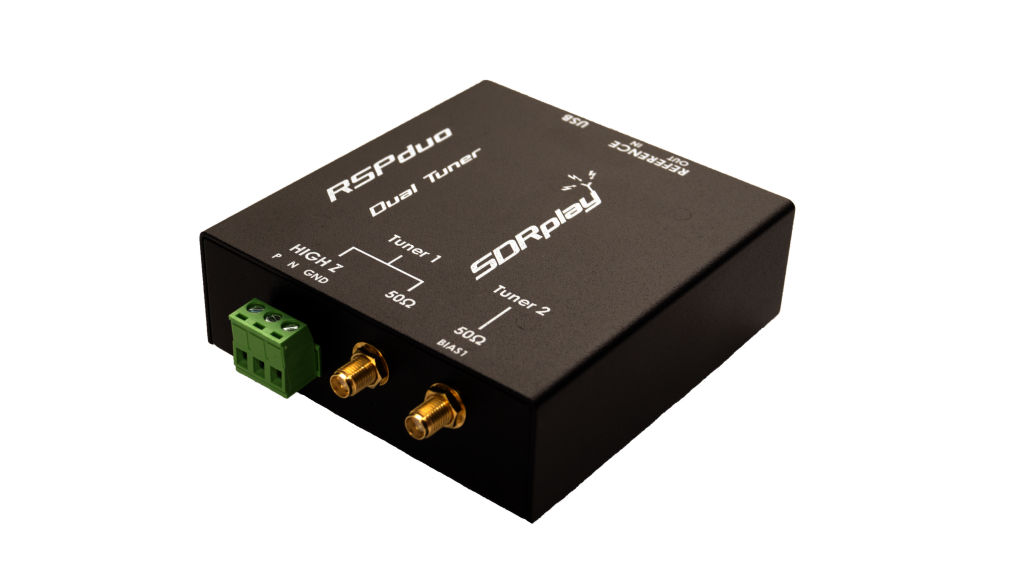
This new device has two full receivers/tuners using 14 bit technology for higher receiver dynamic range. The number of bits in the ADC (Analog to Digital) converter will set the maximum dynamic range of the resulting data stream. This is approximately SNR=6dB×Bits+4.8dB (for a full scale input sine wave).
Each tuner can operate individually anywhere between 1kHz and 2GHz with up to 10MHz of bandwidth or both tuners can operate simultaneously anywhere between 1kHz and 2GHz with up to 2MHz of bandwidth per tuner. Additionally this SDR has a high stability reference and option for external clocking. The device is intended for industrial, scientific and educational applications. Price is around $300.
For those needing the high quality device but without the higher cost dual receiver the RSP1A is a excellent alternative.
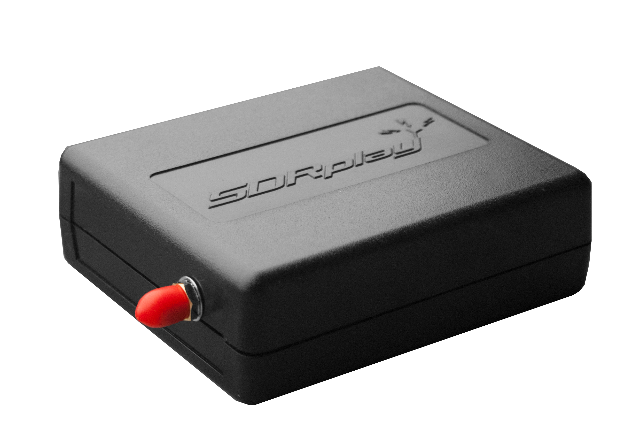
The RSP1A offers similar performance but at a lower cost of just over $100. With a 10MHz visible bandwidth and the companion SDRuno software the RSP1A has all the popular ham bands and shortwave broadcast bands as “presets” for instant set-up. This device may also be used as an low cost spectrum analyzer or portable receiver for tracking down interference sources..
Theses receivers offer a significant improvement in performance, as compared to the low end SDR dongle type of SDR, for a small increase in cost.